I Knew the Math. I Chose the "Wrong" Debt Payoff Method Anyway. And I Saved $847.
James Whitfield
I knew the math before I started.
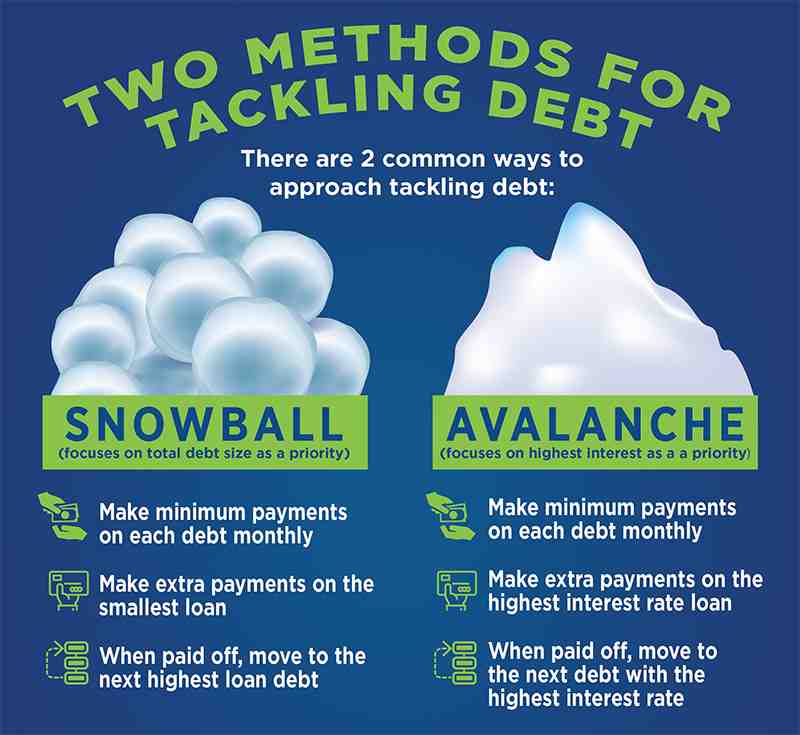
The debt avalanche — paying off highest-interest debt first — would save me $847 in interest over the life of my payoff plan.
The debt snowball — paying off smallest balance first — would cost me $847 more. But I'd get my first "debt-free" win faster.
Every financial expert on the internet would tell me to choose avalanche. It's mathematically superior. It's the "smart" choice.
I chose snowball.
And I don't regret it for a second.
The Setup
This was 2020. I had left banking the year before. My income was inconsistent. Freelance writing. Calculator building. Some consulting.
I had four debts:
- Credit Card A: $2,100 at 26.99%
- Credit Card B: $5,800 at 22.49%
- Car Loan: $12,400 at 6.99%
- Student Loan: $8,900 at 5.25%
Total: $29,200.
I had $400 a month extra to put toward debt. Minimum payments on everything else.
I ran both scenarios through the Snowball vs. Avalanche Visualizer. All data stays in your browser — we never see it.
Compare Both Methods →Avalanche (Highest APR First):
- Order: Credit Card A → Credit Card B → Car Loan → Student Loan
- First debt free: Month 7 (Credit Card A)
- Total interest: $3,847
- Payoff time: 4 years 2 months
Snowball (Smallest Balance First):
- Order: Credit Card A → Credit Card B → Student Loan → Car Loan
- First debt free: Month 7 (Credit Card A)
- Total interest: $4,694
- Payoff time: 4 years 3 months
Wait. Both methods had Credit Card A first. It was both the smallest balance AND the highest APR. So the difference wasn't in the first debt. It was in the middle.
Avalanche would tackle Credit Card B next (22.49%). Snowball would tackle the Student Loan next ($8,900 at 5.25%) because it was smaller than the car loan.
That one switch — paying off a low-interest loan before a high-interest card — cost $847 in extra interest.
"Choose avalanche," every blog said. "It's math."
I chose snowball.
Why I Chose "Wrong"
Here's the thing nobody talks about. I had tried avalanche before. In 2018. When I was still at the bank.
I had three debts. I attacked the highest APR first. It was a $7,200 credit card at 24.99%. I paid $500 a month extra. It took 18 months.
Eighteen months of nothing to show for it. No wins. No celebrations. Just a slowly declining number on a screen.
I quit at month 14. Not because I couldn't afford it. Because I couldn't feel it.
The psychological toll of paying toward a mountain for 18 months without a single "PAID IN FULL" moment broke me. I started spending again. "I deserve this," I told myself. "I've been good."
I added $3,000 in new debt.
So in 2020, I made a different choice. I chose the method that would give me wins. Fast wins. Visible wins.
Credit Card A: $2,100. Gone in 7 months.
I printed the "PAID IN FULL" letter. I taped it to my bathroom mirror. I looked at it every morning.
Then Credit Card B: $5,800. Gone in month 19.
Two cards. Zero balances. In less than two years.
The momentum was real. I felt unstoppable. I found an extra $100 in my budget just from the motivation of seeing those zeros.
By the time I got to the student loan and car loan, I was paying $600 extra a month. Not $400. Because the wins had changed my behavior.
The Real Math
Here's what the pure-math people miss. Human behavior is part of the equation.
If avalanche makes you quit, it doesn't matter that it saves $847. Because if you quit, you pay infinite interest. You never finish.
If snowball keeps you going — if the wins motivate you to find extra money, to cut more spending, to stick with the plan — then the "extra" $847 in interest is actually a bargain.
It's the cost of staying in the game.
| Factor | Avalanche | Snowball |
|---|---|---|
| --- | --- | --- |
| Total Interest | Lower | Higher |
| First Win Timeline | Longer (usually) | Faster |
| Psychological Momentum | Slower | Faster |
| Quit Risk | Higher | Lower |
| Behavior Change Potential | Lower | Higher |
| Best For | Robots | Humans |
I'm not a robot. I'm a 38-year-old dad who likes steak dinners and college basketball. I need wins. I need proof that this is working.
Snowball gave me that.
What the Research Actually Says
There's a study people cite. Boston School of Business, 2012. They analyzed 6,000 debt payoff attempts. People using snowball were more likely to succeed.
Not because snowball is mathematically better. It's not. But because snowball creates "small wins" that build confidence and commitment.
The researchers called it "the progress principle." Small wins lead to bigger wins. Momentum compounds just like interest.
Another study from Northwestern found that people who focused on paying off one debt completely — rather than spreading payments across multiple debts — paid off more total debt over time.
Not because it was optimal. Because it was motivating.
My Actual Results
I finished my debt payoff in 4 years and 1 month. One month faster than the snowball calculator predicted. Two months faster than the avalanche calculator predicted.
How? Because I found extra money along the way. I took on more freelance work. I sold stuff. I meal prepped. I got obsessed.
The snowball didn't just give me a plan. It gave me a reason to try harder.
Total interest paid: $4,201. That's $493 less than the snowball prediction. And only $354 more than the avalanche prediction.
So I "lost" $354 by choosing snowball. But I gained four years of consistent payments, two early debt-free celebrations, and a habit of attacking my finances that I still have today.
That's not a loss. That's an investment.
Find Your Best Method →What You Should Actually Do
Stop asking "which method saves more money." Start asking "which method will I actually finish."
If you're the type of person who can grind for 18 months without a win — if you're a marathoner, a long-game player, someone who finds satisfaction in efficiency — choose avalanche. It will save you money. No question.
If you're the type of person who needs to see progress — if you're motivated by checkmarks, by completed lists, by the feeling of something disappearing — choose snowball. The extra interest is the price of your sanity.
And if you're not sure? Run both through the calculator. Look at the timeline. Look at the first win date. Ask yourself: which one feels possible?
Then pick that one. And stick with it.
Because the only wrong choice is the one you quit.
P.S. I still have that "PAID IN FULL" letter from Credit Card A. It's framed in my office. My kids ask why I keep it. I tell them it's a trophy. "For what?" they ask. "For not giving up," I say. They don't understand yet. But they will. Someday, when they're older and the world tries to sell them something they can't afford, they'll remember that trophy. And hopefully, they'll make a better choice than I did at their age.
