Austin's Rent Dropped 4.3%. So Why Is Your Credit Card Debt Still Climbing?
James Whitfield
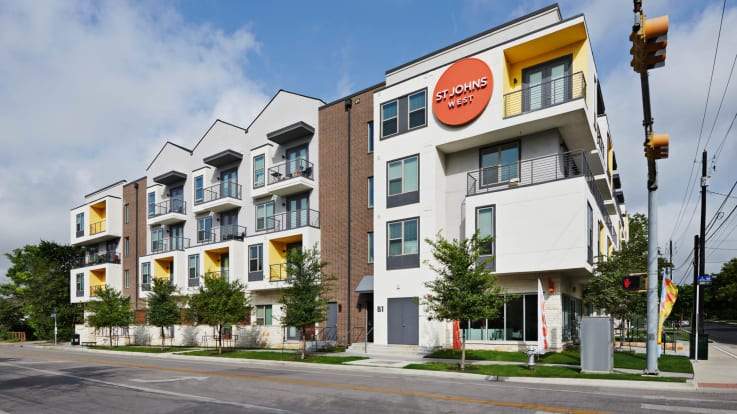
I saw the headline last Tuesday morning. "Austin rents fall 4.3% year-over-year." Median rent now $1,371. Vacancy rate at a ten-year high of 13.8%. Over 30,000 new apartment units delivered in the past year alone.
I should have felt happy for this city.
Instead, I thought about Rachel.
Rachel is a dental hygienist in North Austin. She lives in a one-bedroom off Burnet Road. Her rent dropped from $1,520 to $1,410 in July when she renewed her lease. That's $110 a month back in her pocket. Real money. breathing room.
You know what her credit card balance did in the same three-month period?
It went from $6,800 to $8,200.
She saved $330 in rent. She added $1,400 in credit card debt.
I'll be real with you. This is not a Rachel problem. This is an Austin problem. This is an America problem.
Here's the thing. When your biggest fixed expense drops, your brain does something dangerous. It relaxes. It sees that $110 as "extra" instead of "redirect." And the credit card companies? They know this. They've built an entire business model on it.
Let me show you the math that Rachel didn't see.
The $110 That Disappeared
Rachel's rent savings: $110/month.
Her new spending in the same period:
- Two weekends at Barton Springs with friends: $340
- New patio furniture for her balcony: $280
- Three "treat yourself" dinners on South Congress: $195
- Austin Pride Festival tickets and merch: $150
- Impulse buys at the Domain: $435
Total: $1,400.
That's not spending. That's a leak. And leaks don't fix themselves.
Her credit card APR? 24.99%. The minimum payment on $8,200? About $205. At that rate, paying only the minimum, she'll be debt-free in... let me check.
Never. She'll never be debt-free paying the minimum. The math doesn't allow it.
That's not a payment plan. That's a subscription.
What Austin's Rental Market Is Really Telling Us
The data is wild right now. Let me break it down because I think most people are reading the headlines wrong.
Austin's median rent dropped to $1,371. But the average rent is still $2,022. That gap tells a story. It means there's a flood of new mid-tier apartments driving the median down, while the premium stuff downtown — we're talking $3,302 for a one-bedroom near the Capitol — hasn't budged.
The vacancy rate hit 13.8%. That's the highest in a decade. For context, a "healthy" market is around 5-7%. We're at nearly double that. Landlords are scrambling. They're offering two months free, waived deposits, gift cards.
And here's what nobody's talking about: the median renter household income in Austin is $63,870. To comfortably afford the median rent, you need $81,000-$97,000. That gap? That's where credit cards live. That's where the debt breeds.
| Austin Rental Market Snapshot (2026) | |
|---|---|
| --- | --- |
| Median Rent | $1,371/mo |
| Average Rent | $2,022/mo |
| Vacancy Rate | 13.8% (10-year high) |
| New Units Delivered (past year) | 30,000+ |
| Median Renter Income | $63,870/yr |
| Income Needed for Median Rent | $81,000-$97,000/yr |
| Downtown 1BR Average | $3,302/mo |
| North Austin 1BR Average | $1,347/mo |
The Redirect Strategy
I called Rachel after I ran her numbers. I didn't yell. I've learned that doesn't help. I asked her one question:
"What if that $110 never existed?"
She paused. "What do you mean?"
"I mean, what if your rent stayed at $1,520? You survived on that budget for two years. Your life didn't fall apart. What if you pretended the discount never happened and redirected every dollar?"
She was quiet for a long time.
Here's what we did. I had her open the Debt Payoff Calculator right there on the phone. All data stays in your browser — we never see it.
She entered her debts:
- Credit Card A: $8,200 at 24.99%
- Credit Card B: $3,100 at 22.49%
- Car Loan: $12,400 at 6.99%
- Student Loan: $8,900 at 5.25%
Total minimum payments: $847. She had $300 extra in her budget — including that $110 rent savings.
We ran the snowball method first. Smallest balance to largest. She'd pay off Credit Card B in 11 months. First win. Then Credit Card A in 28 months total. Then the student loan. Then the car.
Total interest paid: $4,892.
Then we ran the avalanche. Highest interest first. Credit Card A first, then B, then car, then student loan.
Total interest paid: $4,127.
The avalanche saved her $765. But the snowball had her first debt-free moment in 11 months instead of 28.
"Which one feels possible?" I asked.
"Snowball," she said. "I need to see something disappear."
I didn't argue. I've seen too many people quit the mathematically optimal plan because it felt like throwing rocks at a mountain.
The DTI Reality Check
Before we hung up, I had her check one more number. Her debt-to-income ratio.
She makes $58,000 as a dental hygienist. That's above the Austin renter median, which is good. But her monthly debt obligations?
- Minimum credit card payments: $205
- Car payment: $310
- Student loan: $195
- Rent: $1,410
Total monthly obligations: $2,120.
Her gross monthly income: $4,833.
DTI: 43.8%.
I watched her face fall on the video call.
"Is that bad?"
"It's not great," I said. "Most mortgage lenders want to see under 43%. Some go to 50% with compensating factors. But you're right at the edge. And here's what kills me — if you had redirected that rent savings to debt instead of spending, your DTI would be 41.6% in six months."
She nodded. She got it.
What I'm Asking You to Do
If you live in Austin right now, you're in a rare position. Rents are down. Vacancy is up. You have leverage with your landlord. You have breathing room that didn't exist two years ago.
Don't waste it.
I'm not saying don't enjoy this city. Austin is hot, literally and figuratively. The Pride Parade is worth celebrating. Barton Springs is sacred. The barbecue is non-negotiable.
But be intentional. If your rent dropped $100, redirect $75 to debt and keep $25 for fun. That's not deprivation. That's strategy.
Because here's what I know from eight years inside a bank: the system doesn't want you to redirect. It wants you to spend the savings. It wants you to upgrade your apartment, not your financial position. It wants that DTI to stay high so you stay dependent.
Don't let it win.
The 30-Day Test
If you're not sure where your money is going, try this. For 30 days, track every dollar. Not in an app that categorizes things for you. Write it down. On paper. Like a debt tracker from scratch.
I did this in 2019 when I left banking. I was shocked. I was spending $340 a month on "miscellaneous." That's not a category. That's a confession.
After 30 days, look at the numbers. Find your leak. Then plug it.
P.S. Rachel texted me last night. She sold the patio furniture on Facebook Marketplace for $180. She cancelled one credit card she hadn't used in eight months. And she set up an automatic $115 transfer to her highest-APR card every payday. "It feels like I'm finally driving instead of drifting," she wrote. I read that text three times. That's why I do this.