Compound Interest Is a Miracle for Investors. For Borrowers? It's a Nightmare.
James Whitfield
I learned this the hard way. Not because I had credit card debt — I was lucky — but because I watched it happen to people I cared about.
Someone I worked with — let's call her Angela — is a dental hygienist in Austin. She had $6,000 on a credit card at 24.99% APR. She made minimum payments. She thought she was making progress.
"How much interest do you pay a month?" I asked her.
She shrugged. "I don't know. $100?"
I pulled out my phone. Did the math. $6,000 at 24.99% APR. Daily interest rate: 24.99% / 365 = 0.0685%. Daily interest charge: $6,000 × 0.000685 = $4.11.
Per day.
"Angela," I said. "You pay $4.11 in interest every single day."
"That doesn't sound like that much."
"That's $125 a month. Just in interest. Before you touch the principal."
She stared at me. "That's more than my car payment."
"Your car payment actually reduces your debt. This $125 just keeps the lights on for the bank."
How Daily Compounding Actually Works
Most people think credit card interest is simple. "24.99% APR means I pay 24.99% of my balance per year."
No. It's worse.
Credit card interest compounds daily. Every day, they calculate your daily balance, multiply it by the daily rate, and add that to what you owe. The next day, they calculate interest on the new, slightly higher balance.
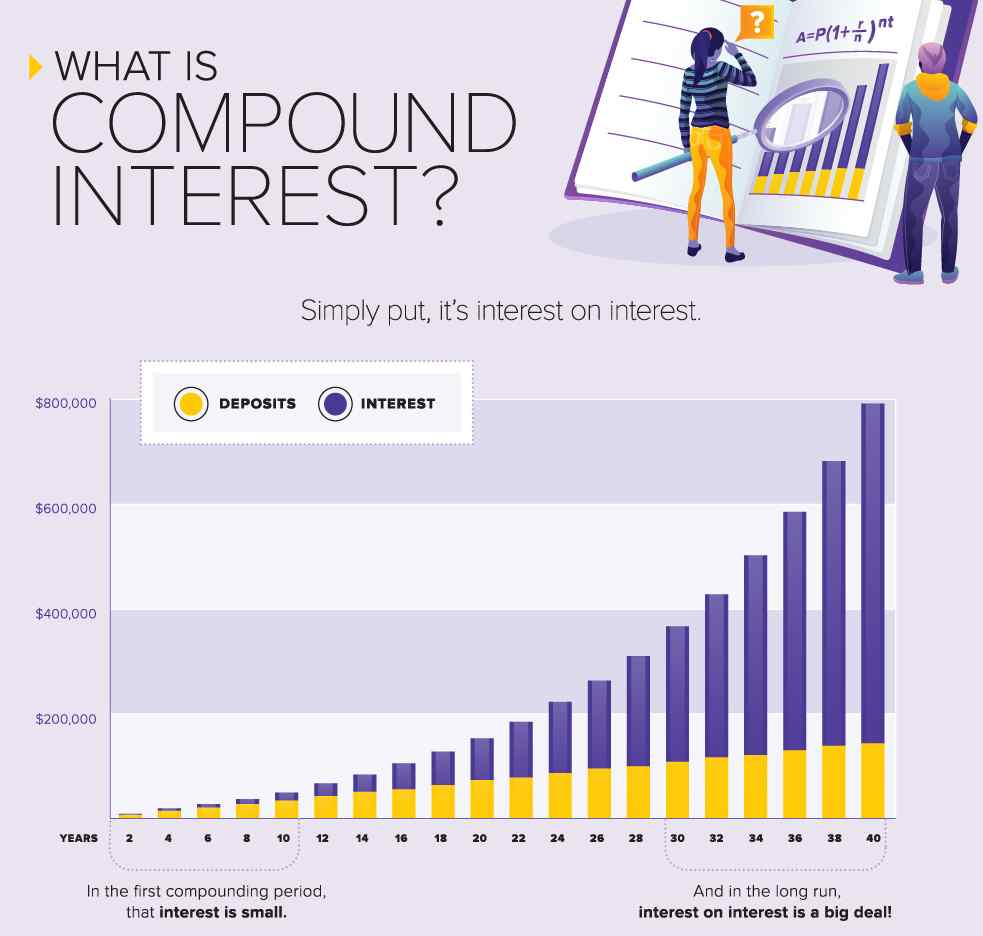
It's interest on interest. Compounding. The eighth wonder of the world — when it works for you. The eighth circle of hell — when it works against you.
Here's the formula the bank uses:
Daily Interest = (APR / 365) × Current Balance
On $6,000 at 24.99%:
- Day 1: $6,000 × 0.000685 = $4.11
- Day 2: $6,004.11 × 0.000685 = $4.11
- Day 30: ~$124 in interest for the month
But here's the trap. If you make a $200 minimum payment, $124 goes to interest. Only $76 goes to principal.
Your new balance: $5,924.
Next month, the interest is calculated on $5,924. Slightly less. But still $123.
Month after month. Year after year. The balance creeps down. The interest keeps eating.
| Month | Starting Balance | Interest | Payment | Principal | Ending Balance |
|---|---|---|---|---|---|
| --- | --- | --- | --- | --- | --- |
| 1 | $6,000 | $124 | $200 | $76 | $5,924 |
| 6 | $5,572 | $115 | $200 | $85 | $5,487 |
| 12 | $5,088 | $105 | $200 | $95 | $4,993 |
| 24 | $4,024 | $83 | $200 | $117 | $3,907 |
| 36 | $2,784 | $58 | $200 | $142 | $2,642 |
At $200 a month, it takes 42 months to pay off $6,000. Total interest: $2,400.
You paid $8,400 to borrow $6,000.
That's not a loan. That's a subscription.
The Rule of 72 — In Reverse
Investors use the Rule of 72 to estimate how fast money grows. Divide 72 by your return rate, and that's how many years it takes to double.
At 8% return, money doubles in 9 years.
Debt works the same way. In reverse.
At 24.99% APR, your debt would double in 72 / 24.99 = 2.9 years. If you made no payments at all.
But you are making payments. Minimum payments. So it doesn't double. It just... stays. Like a guest who never leaves.
Here's what I mean. If you have $6,000 at 24.99% and you pay exactly the interest every month ($125), your balance never drops. You pay $1,500 a year. Forever. To maintain a $6,000 debt.
That's renting money from the bank. And the rent is $125 a month. For life.
The Extra Payment Miracle
I showed Angela one more number. What happens if she pays $300 instead of $200.
Just $100 extra.
| Payment | Monthly | Payoff Time | Total Interest | Interest Saved |
|---|---|---|---|---|
| --- | --- | --- | --- | --- |
| Minimum | $200 | 42 months | $2,400 | — |
| +$50 | $250 | 31 months | $1,725 | $675 |
| +$100 | $300 | 24 months | $1,200 | $1,200 |
| +$200 | $400 | 18 months | $720 | $1,680 |
"An extra $100 cuts my payoff time in half?" she asked.
"And saves you $1,200 in interest. That's a 20% return on your extra $100. Every month."
"Where do I find $100?"
"You find it. Or you keep paying $125 a month in interest to a bank that doesn't know your name."
She found it. Cancelled a subscription. Packed lunch twice a week. Sold some clothes. $107 extra.
She paid off that $6,000 in 23 months. One month faster than the calculator predicted. Because once she saw it working, she found another $50.
Why Banks Don't Want You to Know This
I spent eight years inside a bank. I know why they don't teach this in school. I know why the fine print is fine. I know why the "minimum payment" is displayed in 24-point font and the "total cost if you pay the minimum" is hidden on page 4.
Because knowledge is power. And power is profit. And they want the profit.
The average credit card debt in America is $7,500. At 20% APR, that's $1,500 a year in interest. Per cardholder. Multiply by 200 million cardholders.
That's $300 billion a year in credit card interest revenue.
They don't want you to pay off your debt. They want you to maintain it. To revolve it. To pay the minimum forever.
That's not conspiracy. That's business.
What You Can Do Today
1. Calculate your daily interest. (APR / 365) × Balance. Stare at that number. Feel it.
2. Find one extra payment. $25. $50. $100. Whatever. Set it on autopay.
3. Watch the balance drop. Use the calculator. Track it weekly. Build momentum.
4. Never carry a balance at 20%+ APR again. If you can't pay it off, don't charge it.
P.S. Angela paid off her last credit card three months ago. She called me from her car, parked outside the bank, after she made the final payment. "I just paid $6,000 in 23 months," she said. "And I only paid $1,089 in interest. The calculator said $1,200. I beat it." She was crying. Happy crying. "I didn't know I could do this." I didn't tell her that I cried too, after I hung up. Because that's the whole point. Not the numbers. The knowing. The proving to yourself that the bank doesn't own you. That compound interest can work for you, not just against you. That you can win.