3% transfer fee on $10k is $300. Is that worth it? Let’s do the math.
I get this question all the time. Someone has a credit card at 24%. They get an offer in the mail: “0% APR for 15 months on balance transfers. 3% fee.” They’re excited. Then they see the fee and hesitate. “Why should I pay $300 just to move my debt?” Because that $300 might save you $2,000 in interest. Or it might be a waste. It depends on how fast you pay it off.
Let me walk you through the exact calculation.
Say you have $10,000 at 24%. You plan to pay $500 a month. If you do nothing, you’ll pay about $2,400 in interest over 20 months. That’s $2,400 the bank gets.
Now say you transfer to a 0% card with a 3% fee – $300. You still pay $500 a month. You’ll pay off the $10,300 in about 21 months (because the fee adds a little). Total cost: $300. You save $2,100. That’s worth it.
But what if you can only pay $200 a month? Then at 24%, you’ll take forever and pay huge interest. But with a balance transfer, the 0% lasts only 15 months. After that, the rate jumps to something like 22%. If you still have a balance at month 16, you’ll get hit with deferred interest or a high rate. So a balance transfer only makes sense if you can pay off the full balance before the promo period ends.
That’s the trap. People transfer, then keep paying the minimum, then get slammed when the promo expires. Don’t be that person.
The balance transfer calculator shows you the breakeven point.
Plug in your balance, current rate, transfer fee, promo rate (usually 0%), promo length, and post-promo rate. The tool tells you how many months to breakeven and whether you’ll save money.
Someone I worked with – let’s call her Maria – had $7,000 at 19%. She got an offer: 0% for 12 months with a 2% fee ($140). She could pay $600 a month. The calculator said she’d save $1,100. She did it. Paid off the balance in 12 months. Saved real money.
Another guy – call him Steve – had $15,000 at 22%. Same offer. But he could only pay $300 a month. The calculator showed he’d still have $6,000 left when the promo ended. Then the rate would jump to 25%. He’d actually pay more in the long run. So he skipped the transfer and focused on avalanche payments instead.
So the rule is simple. Only transfer if your monthly payment is high enough to clear the balance before the promo ends. If you can’t, don’t bother.
Now, what about multiple cards? Should you transfer them all? Use the credit card interest calculator to see which one is costing you the most.
Take your highest rate card. That’s the candidate for transfer. But if you have multiple cards, you might transfer only the highest rate one, not all. Because the fee is a percentage of the amount transferred. Transferring a 12% card with a 3% fee might not be worth it – the savings are small.
I remember a woman named Lisa. She had three cards: $4k at 24%, $6k at 18%, $10k at 15%. She got a 0% for 12 months with 3% fee. I told her to transfer only the 24% card. The fee was $120. She’d save about $800 in interest. The other cards? Avalanche them as usual. She did that. Worked perfectly.
Another factor: balance transfer cards often have a limit. You might not be approved for the full amount. So check your credit limit before you plan.
Also, don’t use the new card for purchases. That’s a common mistake. If you buy something on a balance transfer card, your payments go toward the lowest interest balance first – usually the transferred balance at 0%. So your purchases sit at the higher rate, accruing interest. That’s a disaster. So after you transfer, cut up the new card or lock it away. No purchases.
Now, what about the debt payoff calculator? Use it to see how a balance transfer fits into your overall plan.
If you transfer a balance, remove that debt from the calculator and add the new card with 0% rate but a fixed payoff deadline. Then recalc your avalanche order. The 0% card becomes low priority – pay minimum on it until near the end of the promo, then attack it aggressively.
A guy I know – call him Tom – had $10k at 22% and $5k at 10%. He transferred the $10k to a 0% for 15 months with 3% fee. Then he used the debt payoff calculator to focus on the $5k at 10% first, because that was now his highest rate (since the transferred card was 0%). That’s counterintuitive but correct. He paid off the $5k in 6 months, then put everything toward the transferred balance. He cleared it in month 14. Saved about $2,500.
So balance transfers are powerful, but they require discipline. Here’s a checklist before you apply.
One, calculate your monthly surplus. Be honest. If you can’t pay off the transferred balance within the promo period, don’t transfer.
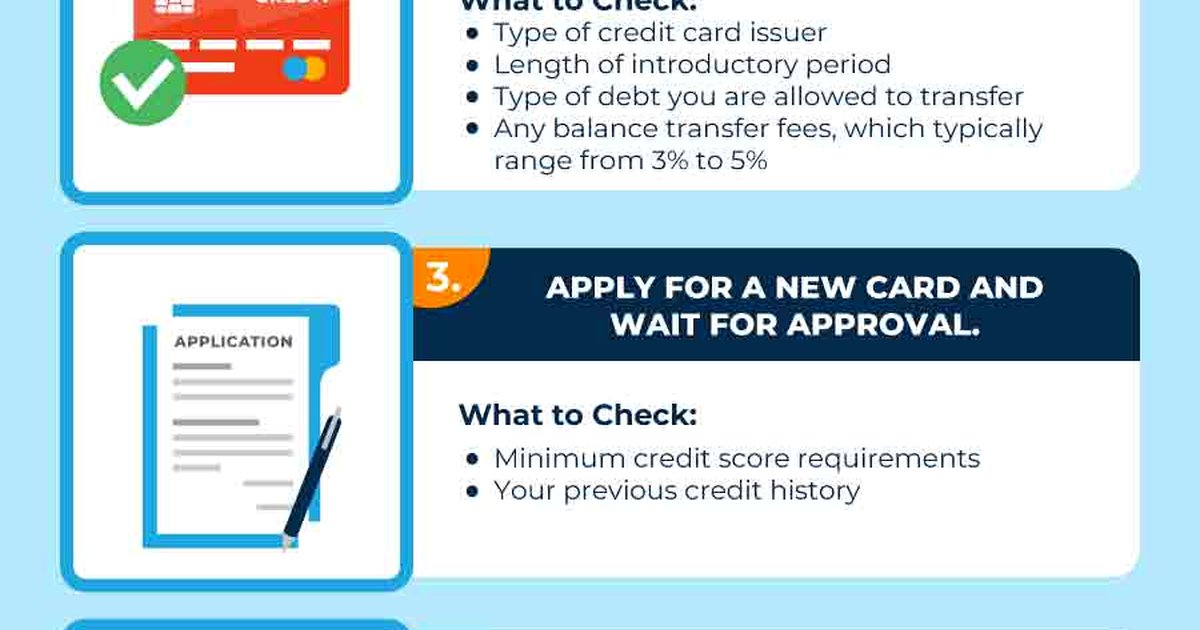
Two, check the fee. 3-5% is typical. Anything over 5% is usually not worth it unless your current rate is extremely high.
Three, read the fine print. Some cards charge deferred interest – meaning if you don’t pay off the full balance by the end of the promo, they add back all the interest you would have paid. That’s brutal. Avoid those cards. Look for “no deferred interest” language.
Four, set up automatic payments for the amount needed to clear the balance one month early. Don’t cut it close. Life happens.
Five, don’t close your old card after transferring. That can hurt your credit score. Just stop using it.
I’ll be real with you. Balance transfers aren’t for everyone. If your credit is below 650, you probably won’t qualify for the best offers. If you have a habit of running up cards after you pay them off, a transfer won’t fix that. Fix the behavior first, then use the tool.
But for the right person – disciplined, good credit, a clear payoff plan – a balance transfer can save thousands.
P.S. Maria – the one with the $7k transfer – she paid off her balance in 10 months instead of 12. She called me and said “I just made my last payment. The card is at zero. I’m never doing this again.” She meant the debt, not the transfer. I hope so.
James